
Mastering Your Command an Army Defense Strategy: Tactical Lessons from Real and Virtual Warfare
Discover how to build a robust command an army defense strategy using U.S. Army organizational principles and tactical fortress defense techniques.
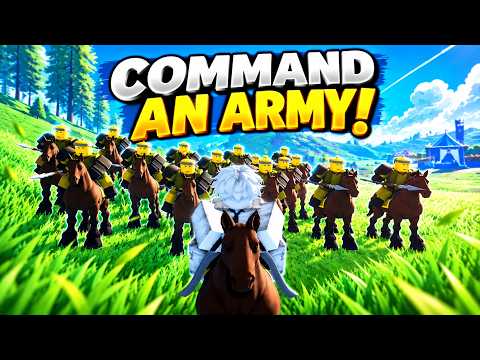 Official mediaDiscover how to build a robust command an army defense strategy using U.S. Army organizational principles and tactical fortress defense techniques.YouTube
 The art of successful warfare is often defined not by the strength of the initial charge, but by the resilience of the final line. To protect your territory effectively, you must develop a comprehensive command an army defense strategy that accounts for both troop discipline and organizational hierarchy. Whether you are managing a digital battalion in a fortress defense simulation or studying the complex structures of modern military forces, a well-executed command an army defense strategy serves as the backbone of every victory.
The Foundation of a Strong Command an Army Defense Strategy
Every successful defense begins with a clear understanding of the chain of command. In tactical environments, a commander’s ability to relay instant, actionable orders can mean the difference between a held line and a total rout. According to player experience in high-stakes simulations like Roblox's Command An Army, the most critical commands are often the simplest: "Hold position," "Follow me," and "Charge."
However, a command an army defense strategy is more than just shouting orders. It requires a deep understanding of unit synergy. For example, community reports suggest that an alliance between different unit types—such as a Spartan and Persian mix—creates a layered defense where one group provides the "anvil" (holding the position) while the other acts as the "hammer" (the counter-attack).
The "Hold Position" Doctrine
Holding a position is the most difficult task for any army. It requires discipline and the ability to ignore the chaos of the battlefield. When units are ordered to hold, they create a static barrier that forces the enemy to exhaust their resources against a fixed point. This is the primary phase of any defensive strategy.
The Counter-Attack Transition
A defense that never moves is eventually bypassed or broken. The transition from "Hold position" to "Charge" or "Wipe them out" must be timed perfectly. If the charge happens too early, the defensive line thins out; if it happens too late, the units may be too weakened to sustain an offensive push.
| Tactical Command | Primary Objective | Ideal Scenario |
|---|---|---|
| Hold Position | Maintain line integrity | Facing a superior numerical force |
| Follow Me | Regroup and reposition | Moving to a secondary defensive tier |
| Charge | Break enemy momentum | When the enemy's front line wavers |
| Wipe Them Out | Total elimination | During the enemy's retreat phase |
Real-World Organizational Structure as a Strategic Model
While gaming offers a micro-view of tactics, the official U.S. Army organizational structure provides a macro-view of how a massive force is managed. A professional command an army defense strategy mirrors this real-world complexity by dividing responsibilities into specific commands.
The U.S. Army is divided into three main pillars: Army Commands (ACOM), Army Service Component Commands (ASCC), and Direct Reporting Units (DRU). Understanding these roles helps a commander realize that defense isn't just about the soldiers on the wall; it’s about the logistics, intelligence, and training happening behind the scenes.
Army Commands (ACOM)
The ACOMs are responsible for the broad strokes of military readiness. For instance, the U.S. Army Materiel Command (AMC) ensures that troops have the equipment they need, while the Transformation and Training Command (T2COM) focuses on how the Army generates and designs its forces. In any command an army defense strategy, you must ensure your "materiel"—your resources and unit upgrades—is managed as efficiently as your frontline tactics.
Army Service Component Commands (ASCC)
These units provide oversight for specific geographic or functional areas. For example, ARCYBER handles electronic warfare, while USARPAC focuses on the Pacific theater. A multi-front defense requires specialized commanders who understand the unique challenges of their specific "AOR" (Area of Responsibility).
| Command Type | Key Responsibility | Strategic Value |
|---|---|---|
| AMC (Materiel) | Logistics and Supply | Ensures units never run out of ammunition or reinforcements |
| T2COM (Training) | Force Development | Integrates new technology and doctrine into the defense |
| ARCYBER (Cyber) | Information Warfare | Denies the enemy the ability to coordinate their attacks |
| USARPAC (Pacific) | Regional Control | Manages specific geographic terrain advantages |
Synchronizing Technology and Doctrine
A modern command an army defense strategy must integrate technology at the "speed of relevance." In the real world, this means using Direct Reporting Units like the Test and Evaluation Command (ATEC) to experiment with new weapons before they are deployed. In a tactical gaming sense, this translates to testing unit combinations in low-risk skirmishes before applying them to a major fortress defense.
Player experience highlights that the most "unstoppable" alliances often come from mixing historical or fictional factions that complement each other's weaknesses. A Spartan unit's high defense (the "Heat" of the battle) combined with a Persian unit's ranged capabilities creates a synchronized force that is difficult to penetrate.
The Role of Intelligence and Security
Defense is reactive by nature, but intelligence makes it proactive. The U.S. Army Intelligence and Security Command (INSCOM) provides the information needed to anticipate enemy movements. Without intelligence, a commander is just guessing where to place their troops. In your defensive strategy, always dedicate a portion of your "force design" to scouting and early warning systems.
Advanced Defensive Formations and Unit Composition
To build an elite command an army defense strategy, you need to categorize your units based on their roles within the formation. Not all units are meant to stand at the gate. Some are meant to be held in reserve, while others are designed for "all collision" maneuvers to disrupt enemy pathfinding.
The Three-Tier Defense Model
- The Vanguard (Outer Wall): Units with high health and "Hold Position" discipline. Their goal is to absorb the initial "Heat" of the attack.
- The Support Core (Mid-Line): Ranged units and commanders who provide buffs or secondary fire.
- The Rapid Response (Reserve): High-mobility units ready to "Charge" or "Follow" the commander to a breach in the wall.
| Defense Tier | Unit Type | Primary Goal |
|---|---|---|
| Tier 1: Vanguard | Heavy Infantry / Shield Bearers | Absorb damage and stall the enemy |
| Tier 2: Support | Archers / Medics / Engineers | Provide sustained damage and repairs |
| Tier 3: Reserve | Cavalry / Special Ops | Counter-attack and plug gaps |
Managing the "Heat" of Battle
Community reports often mention the concept of "Heat"—the intense pressure points where the enemy is most likely to break through. A commander must be able to identify these points instantly. By using commands like "All collision" or "Wipe them out," a commander can focus the army's collective strength on a specific threat before it compromises the entire structure.
Logistics: The Unsung Hero of Defense
No command an army defense strategy can survive without a robust logistics chain. The U.S. Army’s Military Postal Service Agency (MPSA) and Human Resources Command (HRC) might seem far removed from the battlefield, but they ensure the "Total Force personnel readiness."
In a strategy game, this is represented by your resource income and unit production speed. If you lose your "logistics" (your gold mines, supply depots, or spawn points), your frontline defense will eventually crumble regardless of how well your troops hold their position.
| Resource Factor | Impact on Defense | Mitigation Strategy |
|---|---|---|
| Supply Chain | Unit replenishment speed | Protect rear-guard supply lines at all costs |
| Tech Upgrades | Unit effectiveness | Prioritize defensive armor over offensive power |
| Personnel Readiness | Morale and staying power | Rotate units out of high-heat zones to "heal" |
| Command Clarity | Execution of orders | Use clear, repetitive commands to ensure AI/player alignment |
Training for Excellence: The War College Approach
Strategic leader development is a constant process. The U.S. Army War College focuses on producing "skilled critical thinkers and complex problem solvers." To improve your own command an army defense strategy, you must engage in "wargaming"—the practice of simulating different enemy attack patterns to see how your defense holds up.
Practice the following drills to sharpen your command skills:
- The "Hold and Fold" Drill: Practice holding a position for a set time, then retreating to a secondary line without losing unit cohesion.
- The "Targeted Wipe" Drill: Focus all units on a single high-value target while maintaining a defensive stance against the rest of the enemy army.
- The "Split Command" Drill: Divide your forces into two groups and manage their commands independently to defend two separate points.
Conclusion: The Unified Theory of Defense
Ultimately, a successful command an army defense strategy is a blend of rigid organizational structure and fluid tactical execution. By borrowing the hierarchical discipline of the U.S. Army—utilizing specialized commands for materiel, training, and regional oversight—and combining it with the immediate, high-pressure tactics of fortress defense, you can create an impenetrable shield.
Remember that a commander is only as good as their communication. Whether you are telling your troops to "Hold position" against a Spartan-Persian alliance or managing the distribution of talent through a Human Resources Command, clarity and synchronization are your greatest weapons. Keep your lines tight, your logistics flowing, and your commands decisive.
Frequently Asked Questions
What is the most important command in a defense strategy?
While every situation varies, the "Hold Position" command is generally considered the most vital part of a command an army defense strategy. It prevents units from chasing enemies and leaving gaps in the defensive line, ensuring that the integrity of the fortress or formation remains intact during the initial assault.
How does real-world military structure help in strategy games?
Real-world structures, like the U.S. Army’s division into ACOMs and ASCCs, teach players the importance of specialization. By assigning specific roles to different unit groups (e.g., one group for logistics, one for electronic warfare/cyber, and one for frontline combat), you create a more resilient and adaptable defense that can handle multiple types of threats simultaneously.
How do you balance between defense and counter-attacking?
A balanced command an army defense strategy uses the "70/30 Rule." Maintain 70% of your force in a defensive "Hold Position" state to ensure stability, while keeping 30% as a mobile reserve ready to "Charge" or "Follow" the commander for targeted strikes. This allows you to weaken the enemy through attrition before delivering a decisive blow.
Related Guides
Command an Army Hold Command: The Ultimate Strategy Guide and Latest Codes for September 2026
Master Roblox Command an Army with our comprehensive guide. Get the latest codes, unit strategies, and tips to command an army and hold command effectiv...
Command an Army Meta Guide: Best Units, Counter Strategies, and Winning Tips
Master the Command an Army meta with our complete guide on unit counters, team building, and leveling strategies for the popular Roblox strategy game.
How to Command an Army Capture Points in Command An Army for Maximum Gains
Master the battlefield in Command An Army. Learn how to command an army, capture points, and boost your income with our expert strategy guide.
How to Effectively Command an Army: Follow Command Structures for Strategic Success
Master the military chain of command. Learn how to command an army, follow command protocols, and lead with discipline and strategic efficiency.